The treasurer owns the accounting software. The president has a folder with governing documents on cloud storage. Resident emails are spread between personal inboxes. Violation photos are sitting on a person’s phone. A board member also has access to the community website.
Everything is technically possible.
It’s a different matter to determine it.
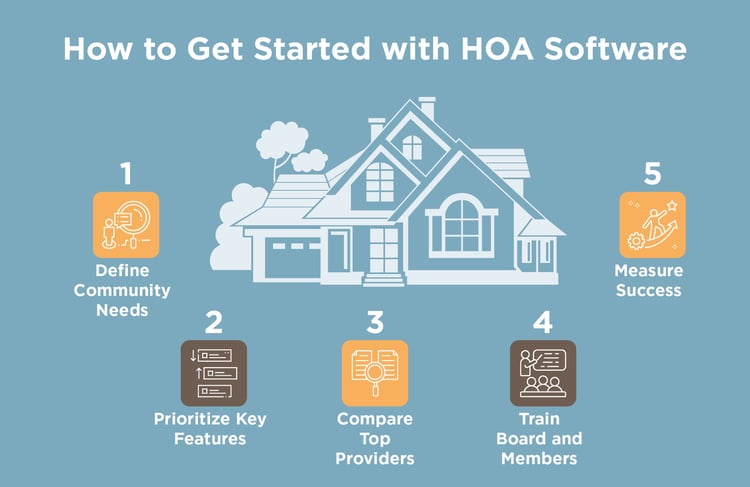
The complexity of administration can increase when a homeowner association is self-managed. A spreadsheet helps with one issue. Another issue can be solved with using a chat room. The board also provides sharing storage, accounting web payments online, and another way to communicate with residents.
In the end, volunteers spend nearly as much time managing the tools as they do coordinating the community.
The issue isn’t with self-management.
Self-management allows an association to have direct control over its operations. It’s hard to manage an association when board members are volunteers and are not administrative personnel.
They must still collect assessments, maintain owner information, record expenses, contact residents, report violations, keep records organized as well as prepare reports. They also have to keep records for the next board.
Good HOA management software should reduce that administrative load without taking control away from the association.
Perfect HOA does this by merging all records (units, finances, payments and communications) including documents, violations, resident portal and meeting minutes into cloud-based systems.
Consider what happens when homeowners move.
Centralized records make it easier to oversee the administrative tasks of the organization. Instead of manually updating the address in one spreadsheet, then updating a different contact list, checking another payment system manually and adjusting access to websites, the information can be applied to all of administration activities of the association.
The Treasurer shouldn’t be required to reconstruct the financial picture
HOA finances can cause a similar problem when the information is scattered.
Bank transactions take place in one place. Assessment payments are received at different locations. The budget could be a spreadsheet. When someone asks how actual spending is compared to the annual budget the treasurer must make up the answer.
HOA accounting software is much more effective when the bookkeeping is tied to daily tasks.
Perfect HOA can sync bank and card activities with Plaid, classify transactions and produce reports, including Profit & Loss budget vs. Actual, as well as cash flow. Reserve, operating funds, and special assessment funds can be tracked separately.
This is important because HOA Accounting isn’t just about calculating the year-end sum. A board could need to determine if landscaping costs are running above budget, what amount is left in a reserve fund or if assessment collection is keeping pace with planned expenses.
The simpler these answers are to access, the less dependent the community becomes of one person’s private spreadsheet.
Residents Shouldn’t Have to Ask What’s in the cupboards
Centralization could enhance the quality of life for residents.
Imagine the most frequent queries an HOA receives. What are the documents for the community? Was my payment received? How do I find the most recent notice? Where can I find information about the Association?
A competent HOA website developer is more than creating a public website. Perfect HOA integrates the community site with a resident’s portal to ensure that owner information and documents in sync with the management system.
That reduces the requirement of keeping a set of information for a board and another set for the website.
This also allows residents to locate the appropriate person prior to contacting a volunteer member of an organization for an idea that’s in place.
If things go wrong, it is important to keep good records.
It’s usually months after the initial test that an HOA administration system is tested in the real world.
The resident is able to contest the violation. Someone inquires if a notice has been sent. A new board wants to understand the reasoning behind an old decision. An auditor needs financial information. A treasurer suddenly leaves.
The memory will not suffice.
Perfect HOA will keep track of communications histories and delivery details, as well as documents, as well as timelines of violations. The violation can be documented by photograph, notices and escalation histories and penalties. This is more efficient than the process of reconstructing information from emails.
Even board meetings are recorded that must be maintained by the person who is in charge. Meeting minutes that are created by AI could help to reduce the time and effort to convert a long meeting into a practical written record.
Self-managing an HOA will always require people to make decisions. Software shouldn’t take over the responsibility.
It will eliminate the needless detective work surrounding it.
If all the data – residents’ information as well as financial records, payments and other documents – is all in one place, board members are less likely to be able to ask “Who has it?” and can focus on the issue that is at hand.
It might be the most important aspect of automation to a board of volunteers.
